I got almost everything wrong before I got it right.
Loss early, chronic illness, 25 years running restaurants, and the long road back to feeling well—everything I help people with, I had to learn for myself first. I’ve made plenty of mistakes and never spent much time pointing fingers—I just learned and grew. You’ll get the same from me: no blame, just what’s next.
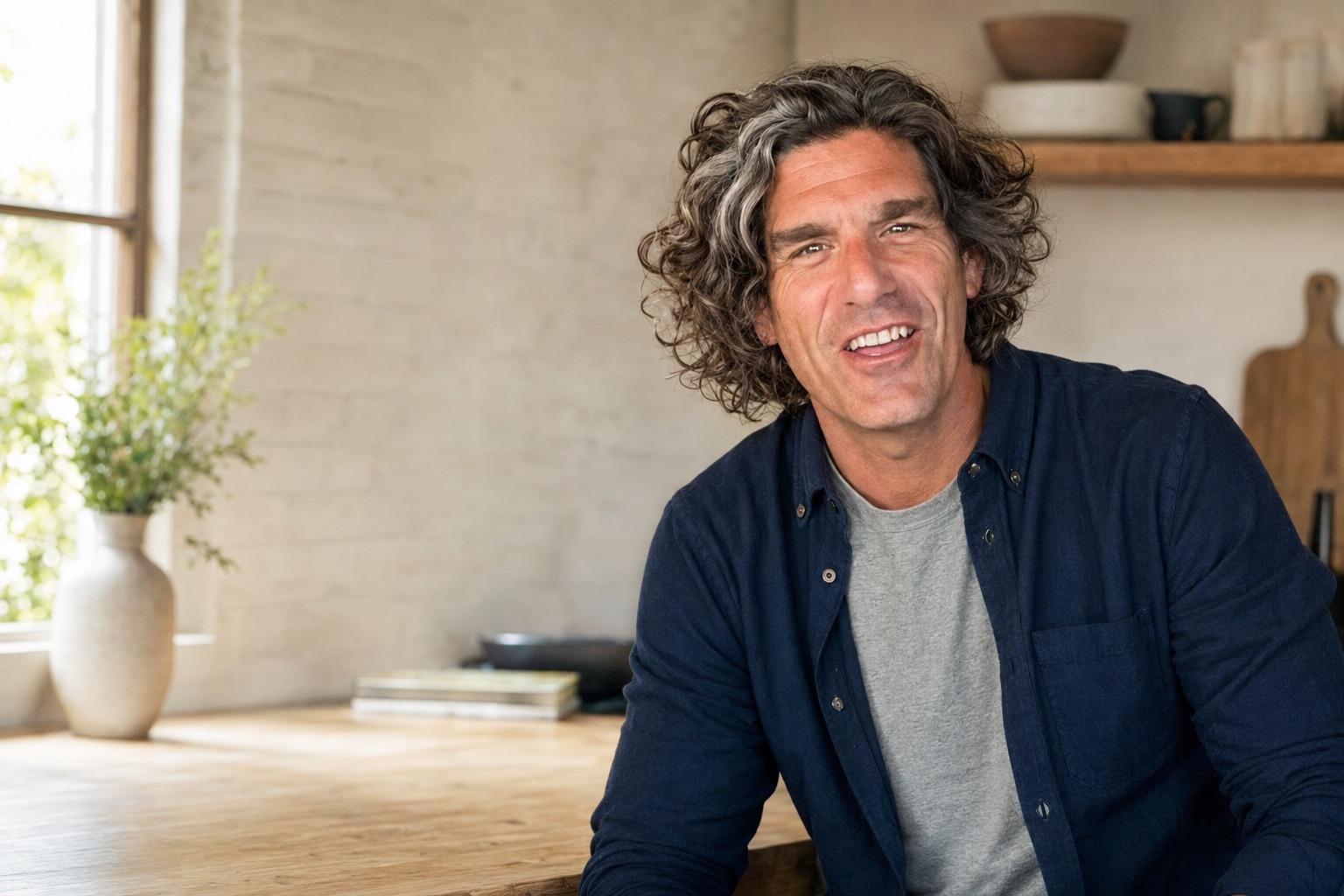
How I got here
I learned how much health matters the hard way. My father died when I was six. My mother died of breast cancer when I was 35. Loss like that teaches you early not to take the body for granted—even though, for years, that’s exactly what I did.
For more than 25 years I owned and ran restaurants. I loved the pace and the people, but I lived the way the industry rewards: too little sleep, too much drinking, meals grabbed standing up at midnight, exhaustion worn like a badge of honor. I’ve had Crohn’s disease since my twenties, and I was giving my body none of what it needed. I just didn’t know better yet.
At 39 I was diagnosed with ADD, and a lot of my life suddenly made sense. For years I’d felt wired wrong and had been quietly trying to slow my own brain down. The diagnosis wasn’t a label—it was permission to stop fighting myself and start working with the brain I’ve got: one thing at a time, leaning on its strengths instead of drowning in its faults. That’s the same approach I build my coaching around today.
So I went looking for real answers. I earned a master’s in Medical Cannabis Science, studying how the brain, the nervous system, and the body work—and it changed how I saw everything, especially food. Living with Crohn’s proves it to me daily: when I eat real, whole food and respect my sleep, I don’t just cope—I feel better than I have in years. And it taught me the thing I most want you to believe: it is never too late to change course. I didn’t turn my own health around until my fifties.
That’s why I coach. I’ve made plenty of mistakes and learned from most of them—including how to be a better father, and how to actually communicate instead of going quiet and resentful. I want to help people avoid the long way around I took. I have a soft spot for men, who are rarely taught what to do with their own feelings—but this is for anyone ready to see their life differently.
Two lines I live by now. Enjoy the good days—there are enough hard ones, and if you never stop to enjoy the good, the bad will swallow them whole. And this one I earned the hard way: I want to be happy, I don’t want to be right. Being right got me divorced. I just want to be happy—and that’s how I want you to look at your life, too.
Background and training
M.S. in Medical Cannabis Science
University of Maryland Baltimore School of Pharmacy
Health Coaching Training & Intensive Practicum
Institute for Integrative Nutrition
Lifestyle Medicine
Harvard Medical School Continuing Education
I am a wellness coach, not a physician, therapist, or registered dietitian. Read the coaching scope for what that means in practice.
What you can expect from me
The plan should survive a hard Tuesday
If a plan only works on your best day, it is not ready for your real life. Every commitment includes an easier version for demanding days.
Progress is information, not a grade
A difficult week can teach us more than an easy one. We use what happened to improve the plan—not to judge you.
One priority at a time
The six pillars give us a complete map, not a longer to-do list. We start with the change most likely to make your life feel easier now.
Good coaching knows its limits
Some needs belong with a physician, therapist, registered dietitian, or another specialist. I will be clear when that is the case and help you identify the right support.
Let’s start by talking about what you need.
Start with a free 40-minute consultation. We will talk about what is getting in the way, what you want to feel different, and the most useful next step.
Book my free consultationFree. Private. No pressure.